Homo Non Sapiens and Biodiversity
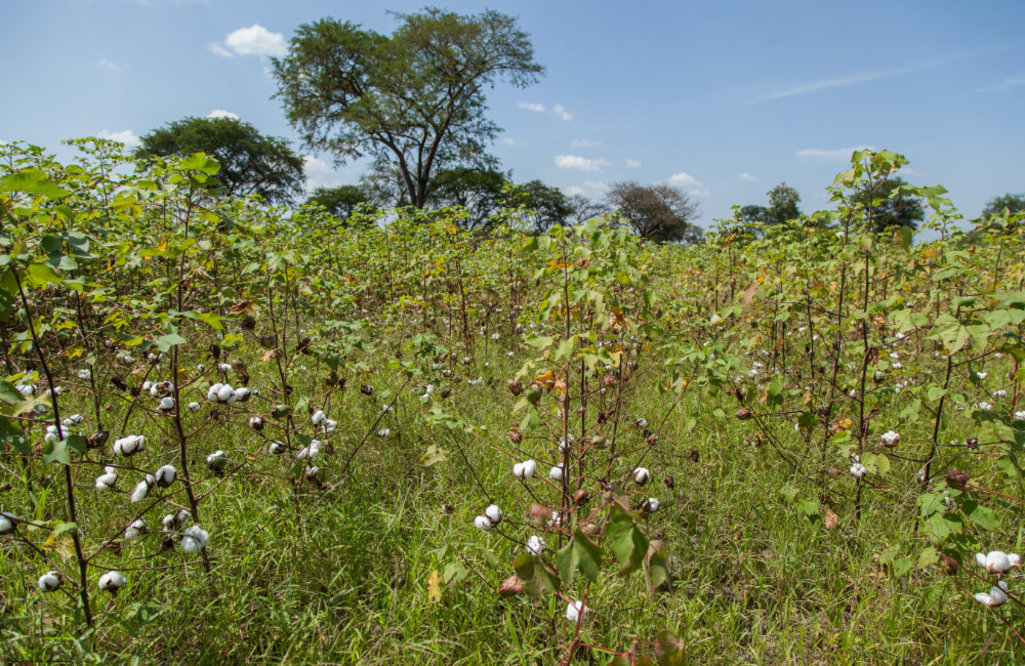
Organic cotton field in Uganda. The surrounding greenery stands for organic farming without the use of pesticides and artificial fertilisers.
As humans, we are the most highly developed species on planet Earth. So we call ourselves “Homo sapiens”. But whether we're really wise and reasonable is questionable, given how we treat other species, like animals and plants. But there are some good examples too.
– A plea by Roland Stelzer, Managing Director of Elmer & Zweifel GmbH (‘Cotonea’)
Against our better judgement, we are destroying one animal and plant species after another. One in three species worldwide is considered endangered, with over 100 species becoming extinct every day, most of which is the responsibility of humans. Even though species extinction has always happened, the extinction rate caused by humans exceeds the natural rate by a factor of 100 to 1000, as stated by the German Federal Agency for Civic Education.
On the other hand, more and more people have to share the space on Earth, eat and provide for themselves. That is why we need smart solutions for how to deal with limited land and resources. This is especially true in industrial agriculture, as it is a major contributor to species loss.
Let us therefore take a look at the agricultural sector and related industries. For over 70 years, the seed, fertiliser and chemical industries have been advertising increased yields through the use of their products, especially pesticides and artificial fertilisers. In doing so, they suggest that they are acting progressively for the benefit of the world's population and its nutrition. However, the agro-industry is less concerned with the welfare of humanity than with maximising profits, if only because of its links to the capital market. All too often, animals and plants fall by the wayside. According to the Federal Environment Agency, around 1,000 pesticides are approved in the EU. Where these are used, not only do unwanted insects and competing plants disappear, but also many beneficial animals and plants – thus disrupting the carefully balanced ecosystem. Insect decline is primarily a consequence of intensive agriculture. But insects, with their pollination services, are of enormous biological and economic importance. For example, 91 of the 107 most commonly cultivated crops worldwide require pollination. Of course, drones, such as those used in China, can also pollinate plants, but they are useless for the food chain of birds or small animals.
More than 80 percent of streams in Germany exceed the limit values for pesticide residues. So much nitrogen fertiliser and manure is spread on the fields that it is carried away in the form of nitrate via the groundwater into forests and water bodies. This is one of the reasons why around half of all ecosystems in Germany are in poor condition. And with them, species diversity. ‘The decline in biodiversity in the agricultural landscape is so dramatic that serious consequences for the functioning of agricultural ecosystems and human well-being are to be expected in the future,’ writes Leopoldina, the prestigious German Academy of Natural Scientists.
Soil as a key factor
The facts mentioned here are scientifically proven. At Cotonea, we can confirm them based on our experience of over 20 years of organic cotton cultivation. That is why I have come to the conclusion that only a cultivation method that takes equal consideration of people, animals and plants can preserve our earth and all its resources and lead us into a prosperous future. The key to this lies in the soil. This has also been recognised in organic farming, where particular importance is given to a diverse soil structure. This leads to humus-rich, fertile soils that can store more water and CO2 than those depleted by intensive agriculture. Billions of microorganisms in a handful of organic soil are the starting point for the complex network of countless animals and plants. Earthworms play an important role in this, as they are both a cause and an indicator of nutrient-rich, healthy soil. According to measurements by the Research Institute of Organic Agriculture, there are up to ten times as many earthworms in organic fields as in conventionally farmed soils.
Despite all the criticism of industrial agriculture, I would still want to put in a word for the farmers. Farmers do not have an easy job. They are often caught between pressure to increase yields, bureaucratic regulations and dependencies on their customers. Personal interests, such as environmental protection, are difficult to pursue in the face of the agro-industry's mantra of ‘grow or go’. Many small farms are fadibg away, and the concentration on a few very large farms is increasing. And yet, many farmers could send a signal for biodiversity in the cultural landscape: for example, with new hedges and shrubs, flower strips and, above all, a willingness to engage with changed cultivation methods, such as regenerative agriculture, despite the existing high demands. Regenerative agriculture aims to protect the soil and build organic matter, through minimal tillage, cover cropping and reduced pesticide use, among other things.”
It is therefore a meaningful interim solution on the path to fully organic farming.
It’s stating the obvious that humanity depends on agriculture to survive. However, it is equally obvious that agriculture cannot function in the long term on the principle of maximising yields through soil exploitation, but only through a balanced give and take of available natural resources, as practised in organic farming.
We have built our brand Cotonea with this mindset. For over 20 years, Cotonea has been supporting our farmers in Kyrgyzstan and Uganda in growing organic cotton for our textiles. Instead of fast fashion, we produce durable, ecological and high-quality fabrics. As a family business, sustainability for us means ensuring a solid economic foundation combined with social responsibility for our employees and partners, as well as preserving biodiversity in the places where we operate.
Thanks to this approach, our company has been in existence for 170 years. We don't know more than others. But we take what we know seriously – and act accordingly.