A Symphony in Yellow
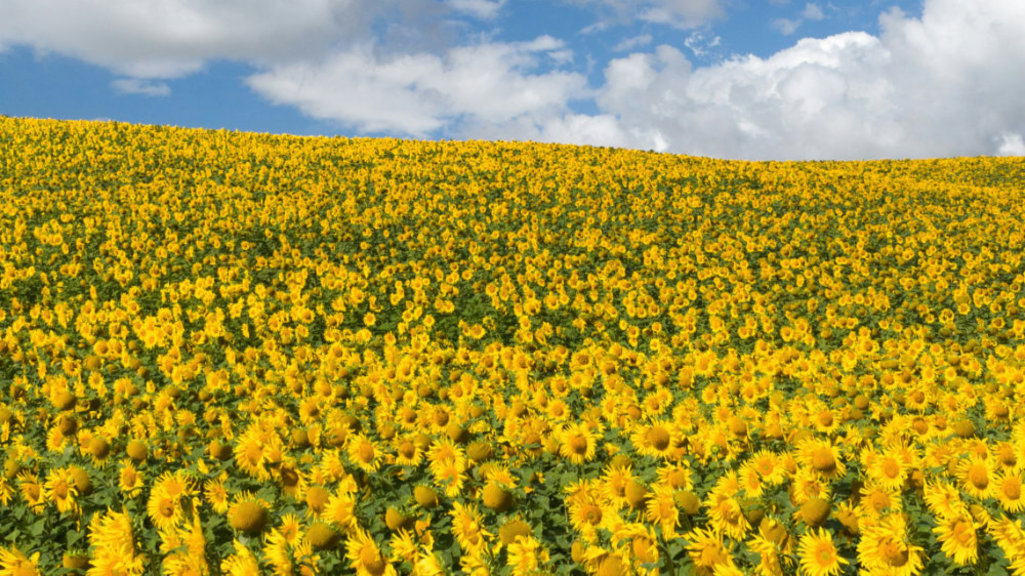
Sunflower field in full blossom | Photo: Annemarie Schaepman
Sunflowers instantly evoke a sense of joy and summer. Their radiant faces and bright yellow colour radiate happiness and hope. Learn more about their amazing role in our ecosystem and let yourself be captivated by their majestic beauty.
For centuries, the sunflower has accompanied mankind as a valuable cultivated plant and delights us every year with its sunny appearance. Its impressively large flowers shine with their golden yellow wreaths and its imposing growth gives it a majestic appearance and dignity right away. Sunflowers also found numerous admirers in art, among which the Dutch painter Vincent van Gogh (1853–1890) made a name for himself. The sunflower served him as a source of inspiration and is now synonymous with his masterwork. Many other paintings are known by van Gogh, some of which also show agricultural fields.
They point to a remarkable ability of sunflowers, particularly in terms of what they accomplish for soil conservation. On the one hand, they are known for tall growth and flower formation, which can put stress on the soil. On the other hand, their high demand for nutrients leads them to form deeper taproots, which penetrate and loosen the soil. Through this, they bring nutrients like nitrogen, potassium and phosphorus to the upper soil layers and enrich and enhance the soil for subsequent crops. They protect the soil against dehydration and erosion and stabilize it. Another effect of this is that sunflowers can remove radioactive substances and heavy metals from the water and soil by storing them it in their roots. This property makes sunflowers so-called hyperaccumulators, which is why they are also used in disaster areas, such as Chernobyl or Fukushima. These plants are then safely disposed of, thus removing the harmful impurities from the ecosystem.
The long-term preservation of soil, as well as the recovery of rich soil fertility is one of the most important goals, both for Cotonea and for the nutrition of the world’s population in general. Healthy soil is not only crucial for organic crop production but also hepls to maintain the productivity of future harvests. By the way, sunflowers are also often planted in Uganda as a rotation crop to organic cotton. In this region is also enough water for sunflowers available, ensuring their growth is reliable and sustainable. Up to the flowers, which also serve as a valuable food source for humans and animals. In Europe, with its cold winters, the sunflowers bloom from summer until late autumn. The many small tubular flowers that form the inner heart of the blossom, are a very popular source of food for numerous insects in late summer. In autumn and winter, it is then the seeds that ensure the survival of many native birds and small mammals, serving a as a natural food source. Depending on the variety and growing conditions a single flower contains an average of about 1500 seeds. We humans have also discovered the highly nutritious and delicate sunflower seeds as part of our diet. Whether eaten raw, roasted, in salads, baked goods or in muesli, they enhance our meals in various ways. Less well known is that, in addition to the seeds, all other parts of the sunflower plant can also be consumed and used for health purposes. In autumn, their flowers become a symbol of gratitude for a rich harvest and nature’s abundance.
Like the sunflower, the cotton plant also produces seeds after flowering. They are considered a by-product of the cotton production. In organic farming without genetic engineering, they can serve as valuable seeds for the next planting or be processed into edible cottonseed oil and press cake. The oil is used as a food, while leftover meal from oil extraction is often utilized as a protein-rich animal feed. The fluffy and soft fibres of the seeds make the cotton capsules appear like white flowers. After the harvest, the first step is to separate the fibres from the seeds, which will then undergo several processes–spinning, weaving, finishing and manufacturing–before eventually becoming a finished textile, such as our organic satin duvet cover «sunflower». The sunflowers on the fine cotton fabric thus reflect in a beautiful and delicate way their own origin, the fields under the warm Ugandan sun.
The sunflower’s close connection to the eponymous sun comes not only from the sunlike shape of its flowers, but also from the way the heads of the young sunflowers faithfully follow the course of the sun as they grow: At sunrise, the sunflowers migrate from east to west until sunset and then return to the east again at night. This phenomenon is known as heliotropism. The plants grow more vigorously on their shady side, ensuring that their stems always face the sun. The way the plants grow, always reaching towards the sun, is mirrored in the joy we feel when we see them. This warmth and happiness is certainly also partly due to the positive effect of the light colour yellow. Sunflowers not only delight us, but they also make wonderful flower gifts for those whose very presence seems to make the sun rise.
In this beautiful unity and harmony with nature, our organic satin duvet cover set «sunflower» promises a restful night, helping us to replenish our energy and allowing us to start the next day feeling refreshed. With their radiant beauty and resilience, sunflowers remind us that there is always a reason to lift our heads in joyful hope.
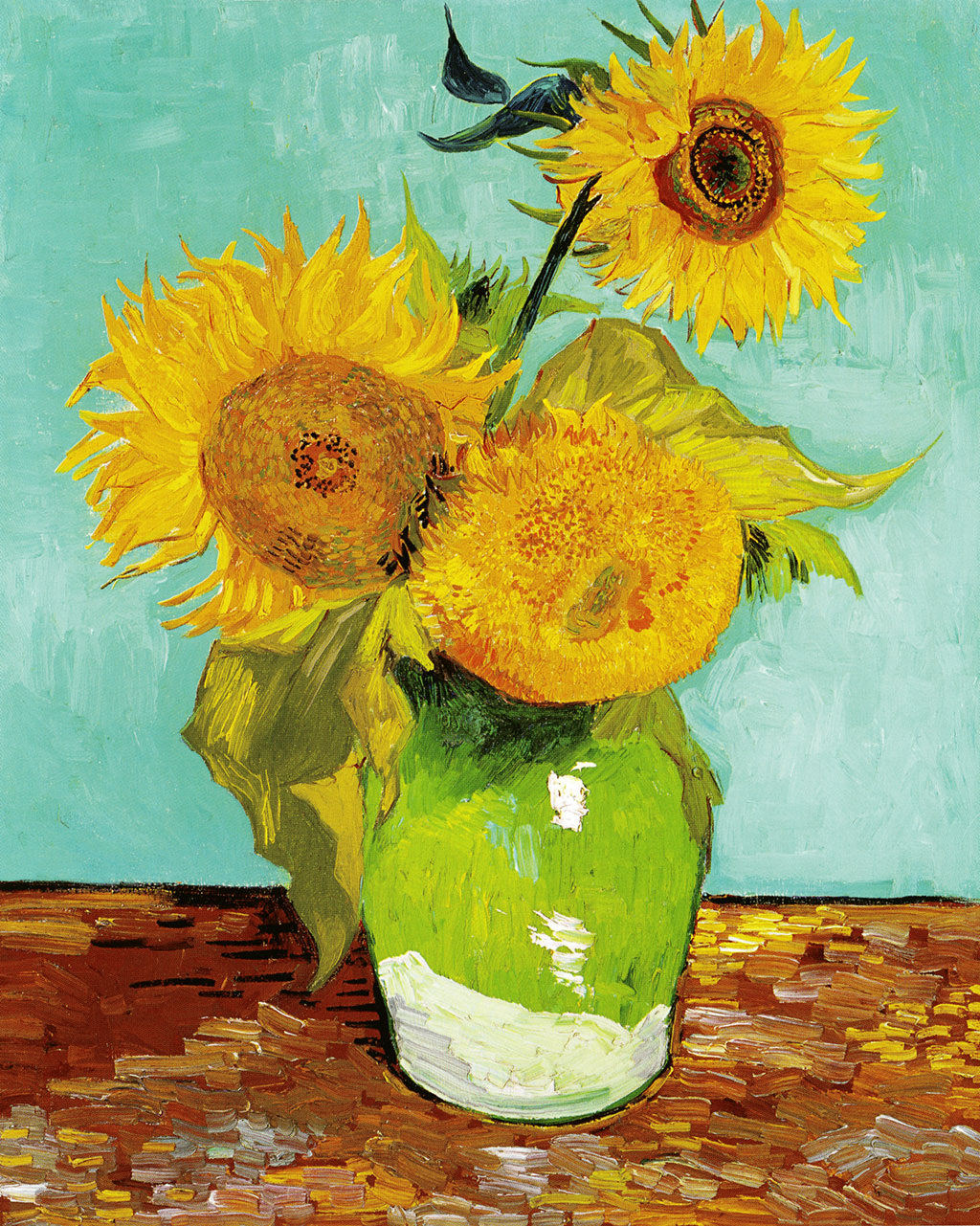
Vincent van Gogh, Three Sunflowers in a Vase, 1888